Skip to content

Cart

Your cart is empty

Magazine Calaveras: What Mexican Skulls Really Mean

Calaveras: What Mexican Skulls Really Mean

Colourful, smiling, flowers in their hair: calaveras are not a Halloween motif but Mexico's way of celebrating life. On Día de los Muertos, La Catrina, sugar skulls and the small mark on every Ay Güey shirt.

· 3 min read
Calavera als Mariachi mit Gitarre – Illustration von ¡Ay Güey!

Calaveras are among the first Mexican symbols people encounter: colourful, decorated, instantly recognisable. Outside Mexico they are usually called sugar skulls and quickly filed under Halloween. Yet they have nothing to do with horror. Calaveras are a language – and whoever understands it understands how Mexico deals with memory, humour and death: not as opposites but as things that belong together.

What "calavera" means

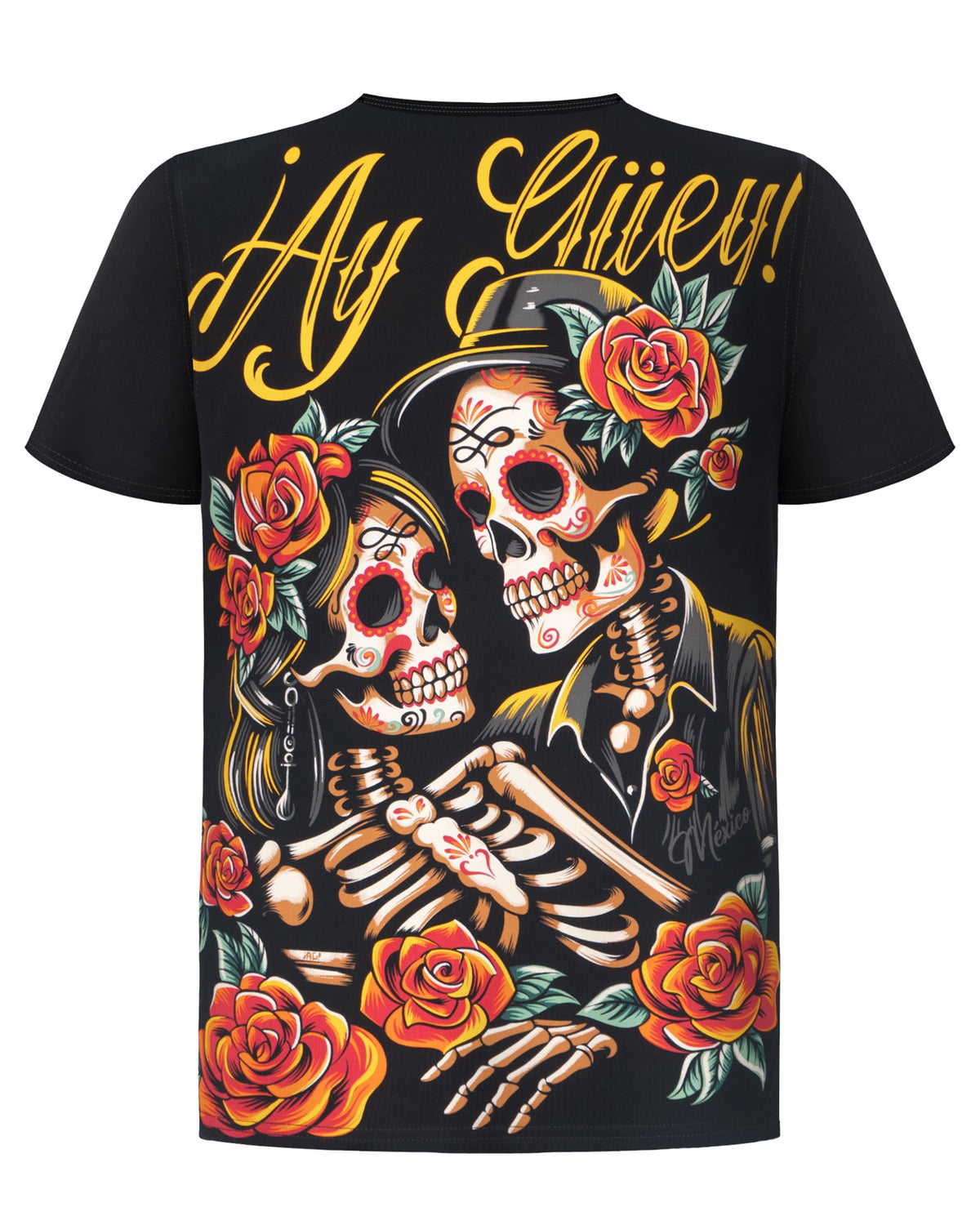
The word simply means "skull". In Mexico, though, it carries far more. Calaveras are the sugar skulls on the altars of Día de los Muertos. They are the "calaveras literarias", mocking rhymes that bury politicians, bosses or friends with a wink. They are the prints of José Guadalupe Posada, who around 1910 created the elegantly hatted lady "Calavera Garbancera" that Diego Rivera later named "La Catrina" and turned into the country's best-known figure. And today they are art, sculpture and design.

Día de los Muertos: a celebration, not a day of mourning

On 1 and 2 November the dead return for one night – so goes the belief that fused pre-Hispanic rituals and Catholic feast days into something of its own. Families build ofrendas: altars with photos, candles, orange cempasúchil flowers, the favourite food of the departed and, of course, sugar skulls, often with the name of the honoured person on the forehead. In 2008 UNESCO inscribed Día de los Muertos on its list of the intangible cultural heritage of humanity.

That is why calaveras smile. That is why they are colourful and receive flowers, food and names. They do not mark an ending but continuity: whoever is remembered is still here. Remembering does not need silence; it needs presence.

Alfeñique: the art of the sugar skull

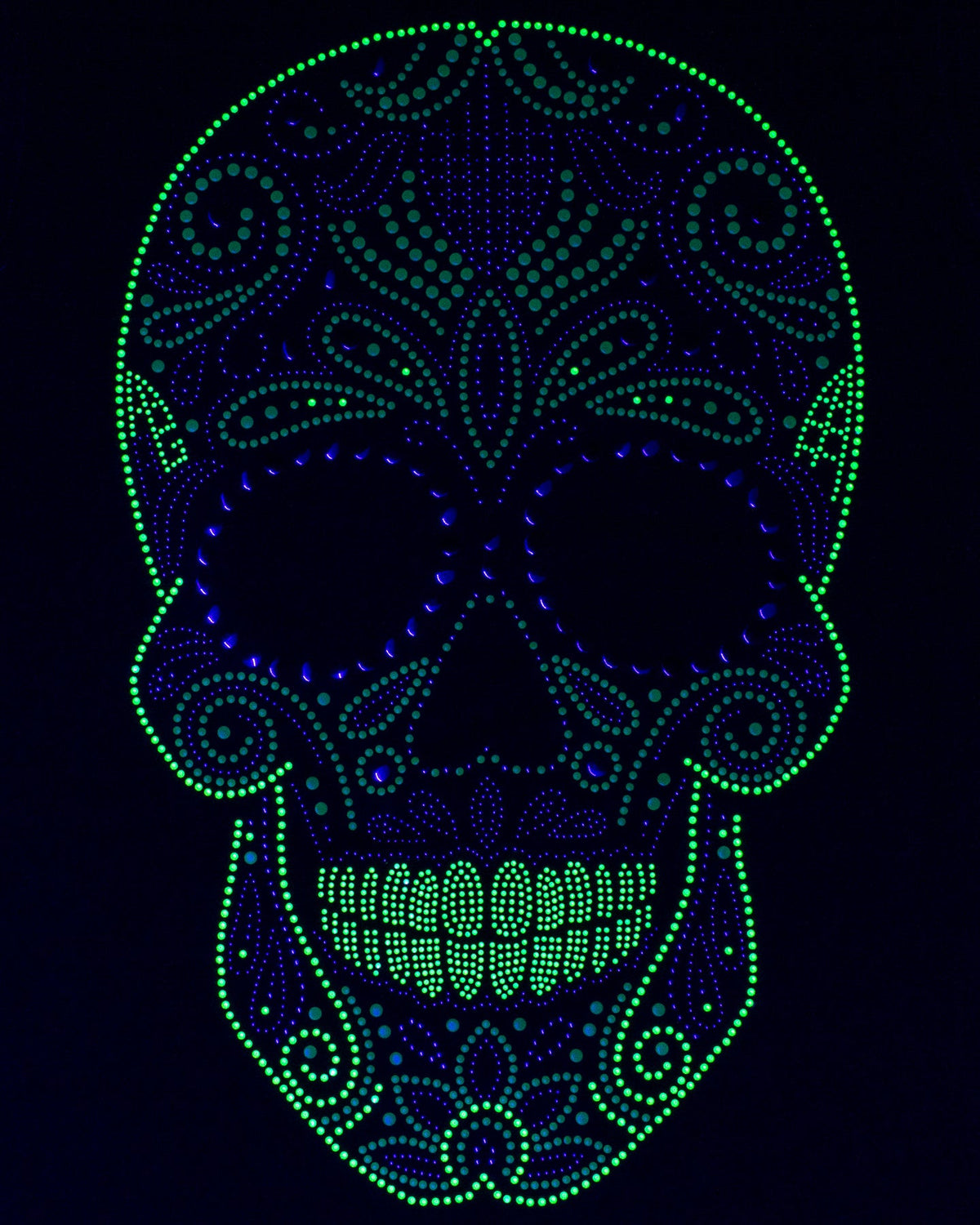
Classic sugar skulls are made from alfeñique – a cooked, pulled sugar paste whose technique travelled via the Arabs to Spain and from there to Mexico, where it merged with pre-Hispanic traditions. Each skull is cast by hand and decorated with coloured icing, foil and beads. They are edible works of art, each one unique, each one for a particular person.

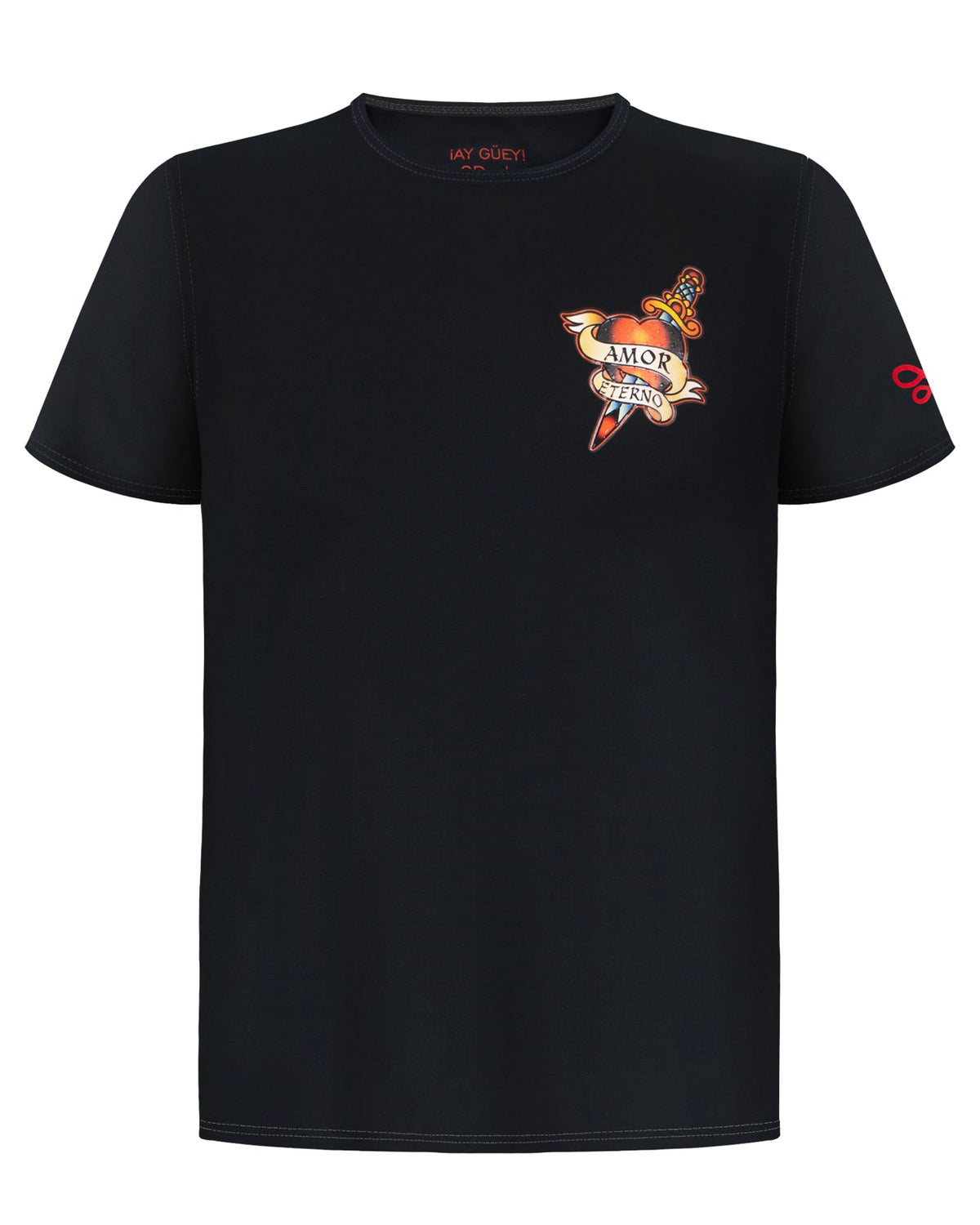
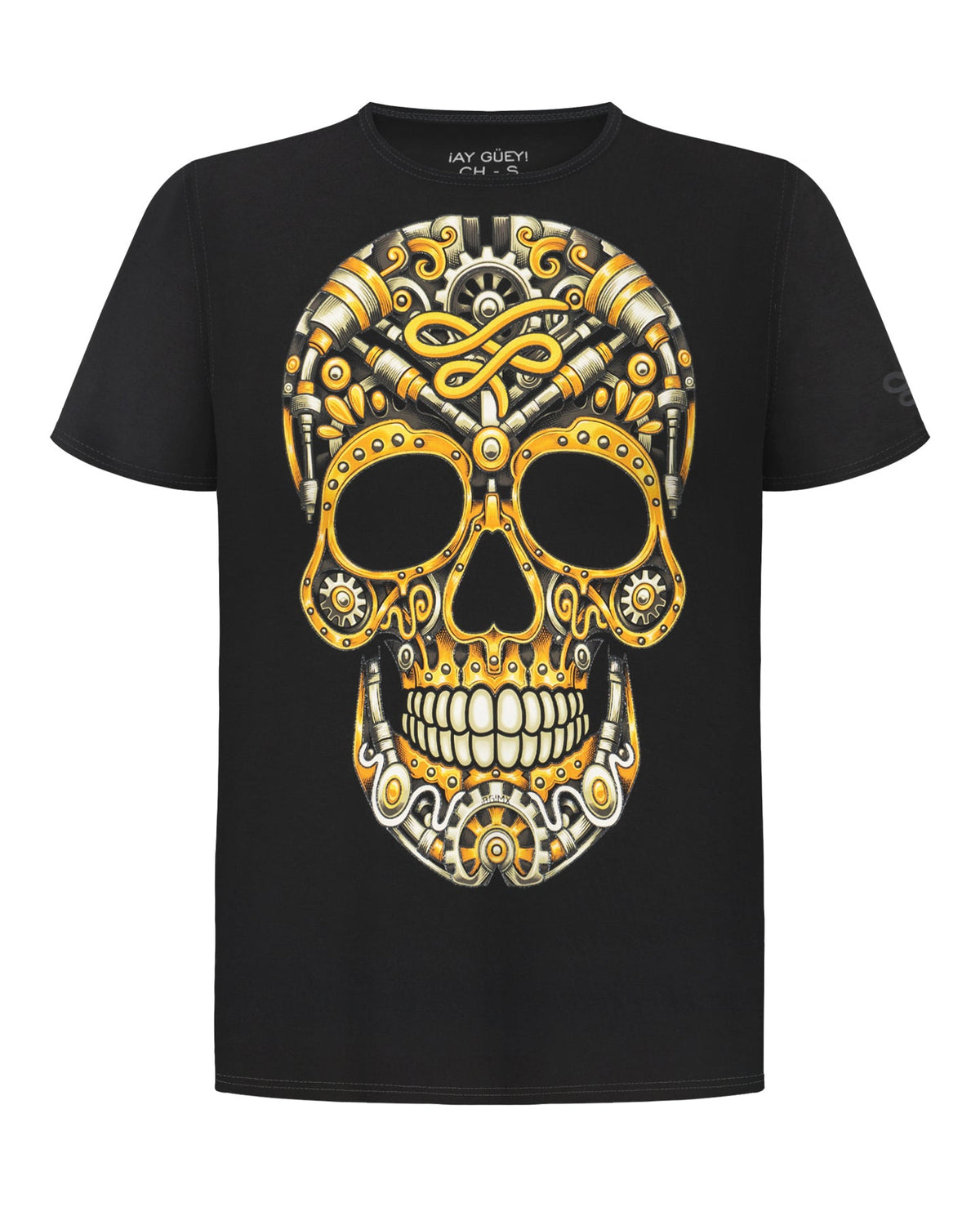
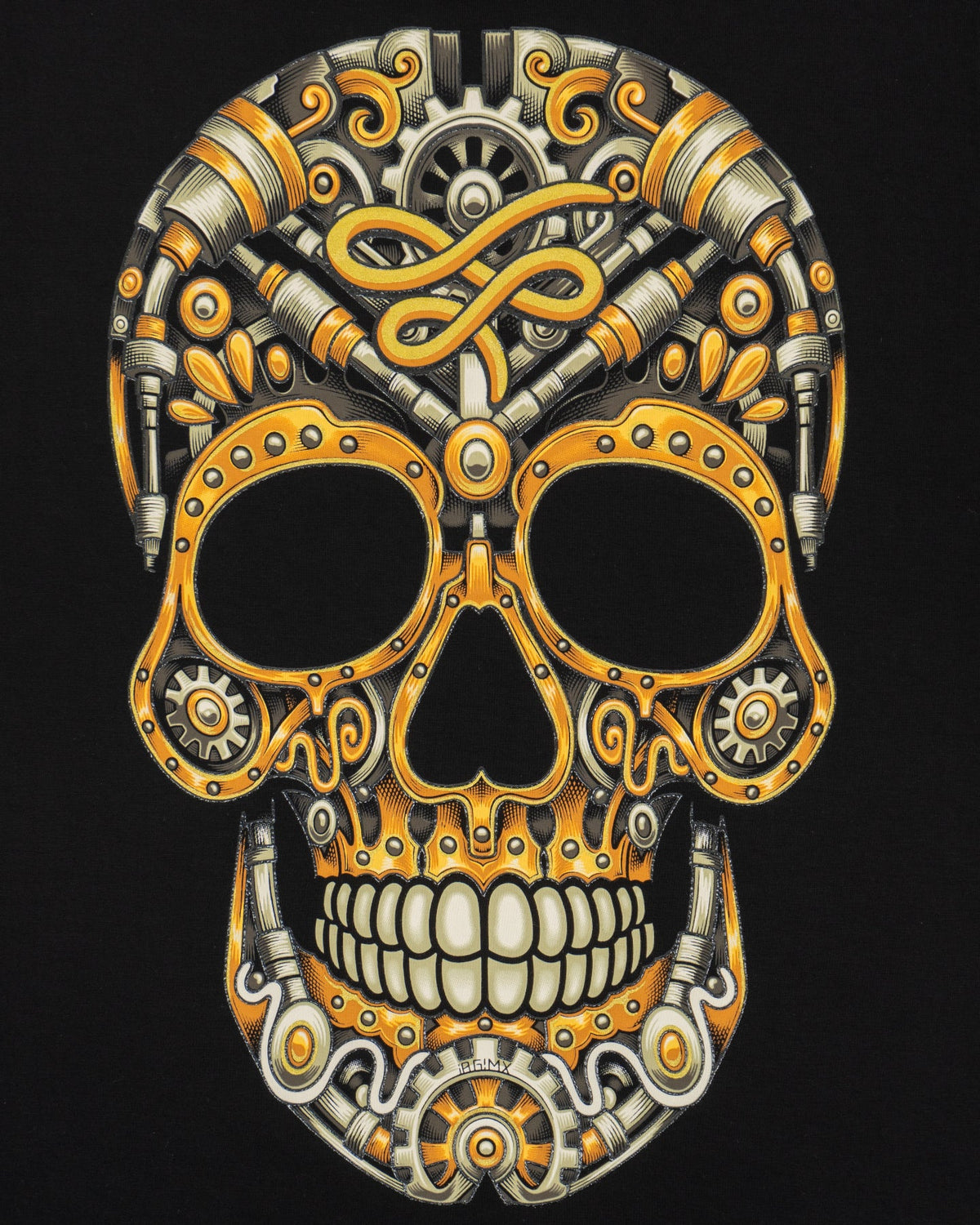
Look closely at an Ay Güey shirt and you will find a small mark inspired by alfeñique. It is more than an ornament: it confirms that a piece is an Ay Güey original – and it carries this tradition along, wherever the shirt is worn.

Why calaveras are so colourful

In Mexico, colour is rarely accidental. On calaveras it signals celebration, personality and joy of life. Each skull becomes a portrait of the person it represents, not a symbol of their absence. That is the attitude behind it: grief is allowed, but it does not get the last word. Joy and memory are not opposites.

From tradition to the shirt

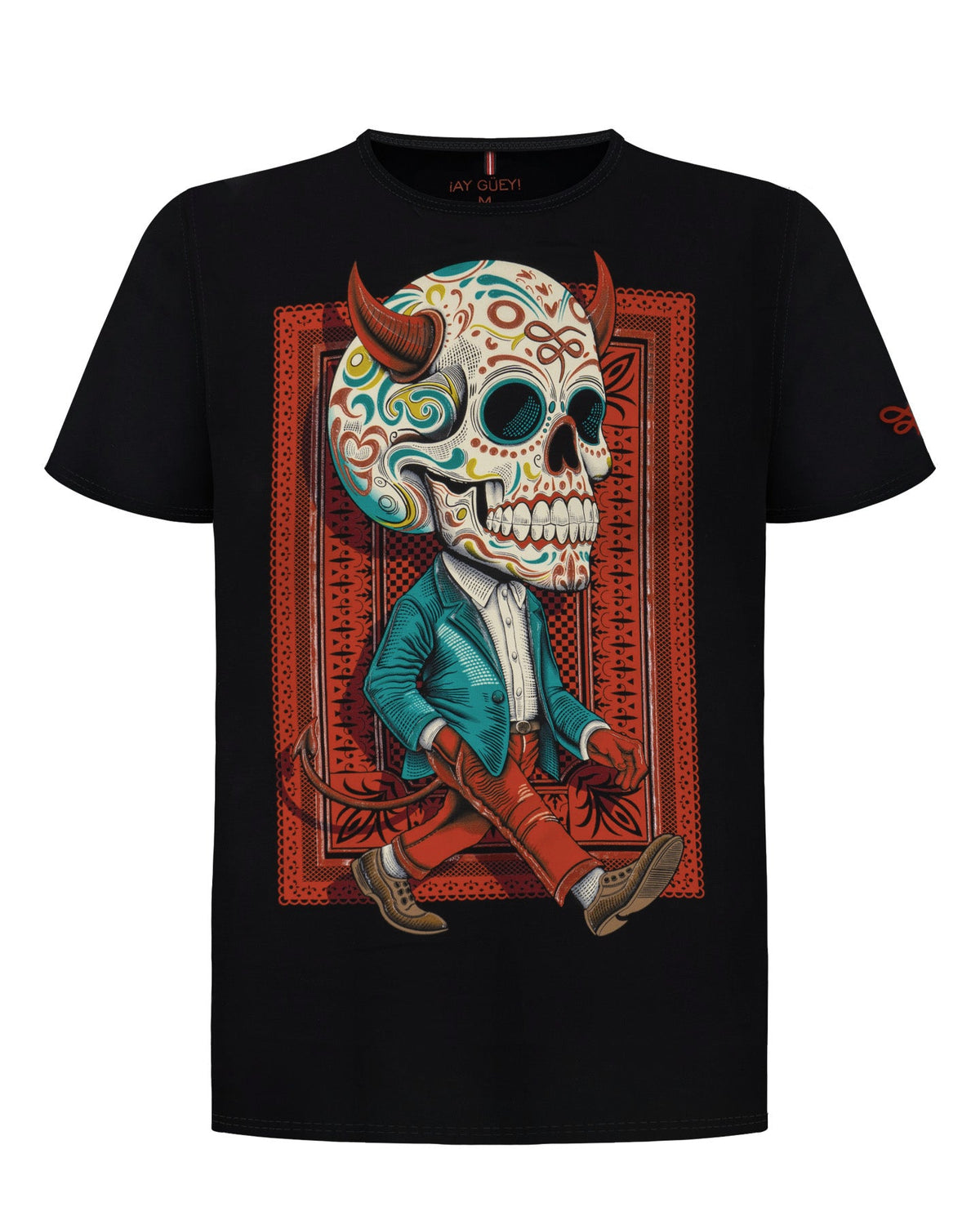
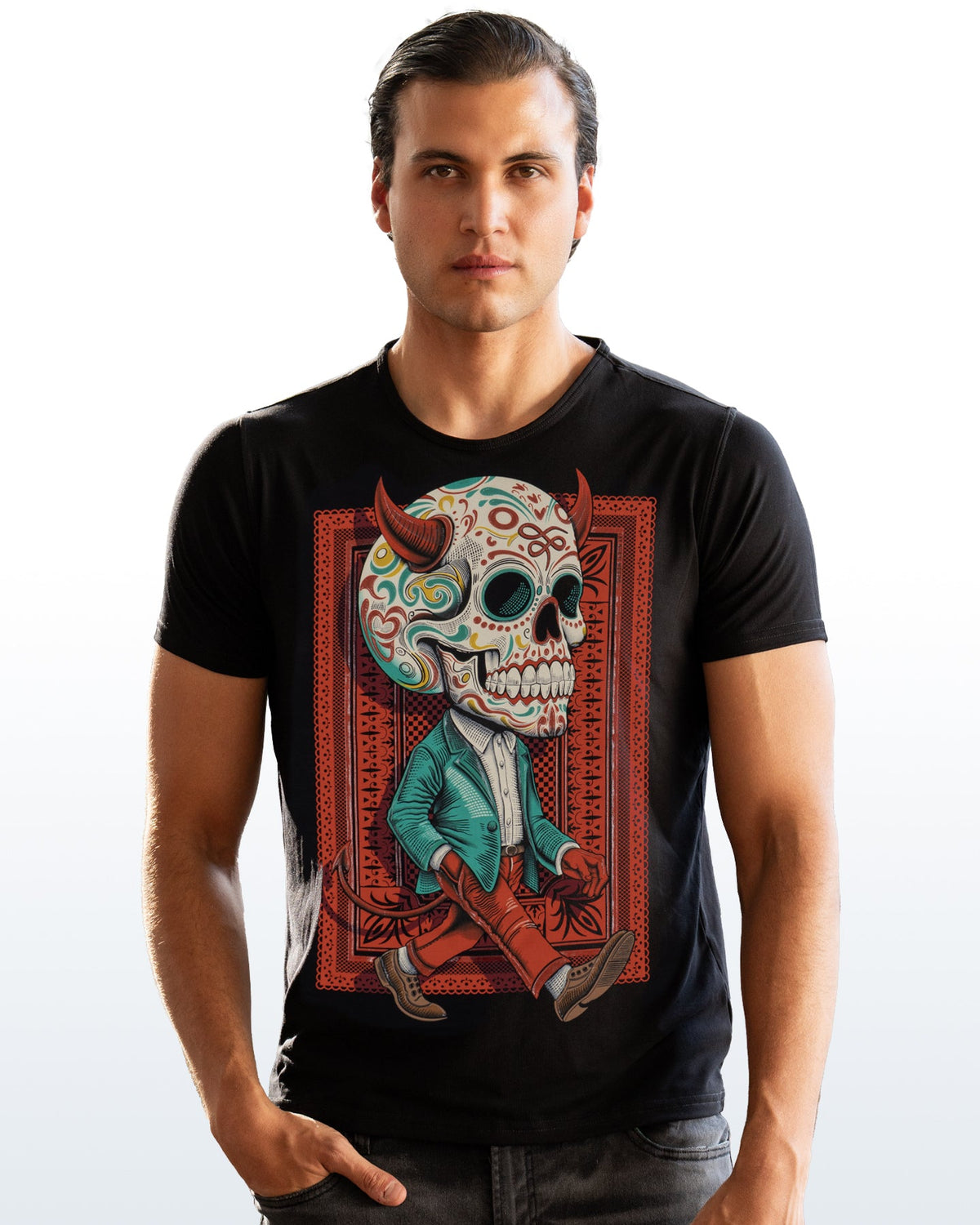
Our calavera designs grow out of this understanding. They are not meant to copy the tradition but to carry it on as something alive – expressive, detailed, with rhinestones and studs set by hand, drawn by Mexican artists. You do not wear them as a costume or a seasonal item but as an everyday connection to a visual language many people recognise as their own. Some see memory in them, others pride, resilience or simply humour. What they all share: they know that in Mexico a laughing skull means life.

Calaveras collection · How our prints are made